Showing posts with label School System. Show all posts

Thursday, March 29, 2012

Would You Fight another Student for Bullying Your Child???

UPDATED: Police Filing Charges in Long Reach Fight

The video showing a man being knocked out by a student has since gone viral.


The video is 27 seconds long. In a quick shot at the beginning, a young man wearing khakis and a collared shirt punches a man wearing a ski mask in the face and knocks him to the ground.
Students scramble and scream as the man falls and lies motionless.
The video was filmed at Long Reach High School, according to school officials.
It was posted on March 21 to worldstarhiphop.com with the description: “Girl send’s [sic] father to fight a boy for throwing a French fry… But gets knocked out by a 17-year-old!” 
As of 1:50 p.m. on March 22, it has been viewed more than 540,000 times. “Long Reach” was trending on Twitter in the Baltimore region last night.
Patti Caplan, spokesperson for the Howard County Public School System, said an adult who was a non-student came on campus at about 2:15 p.m. Wednesday wearing a ski mask. She said the man confronted one of the Long Reach students, threw a punch at him and missed. The student, a junior who is on the football team, then swung back and landed a knockout blow.
“The individual that was hit was unconscious,” said Caplan. “[He] did gain consciousness but refused help and walked off campus.”
Caplan said the man wasn’t arrested and the student wasn’t disciplined because it was determined he acted in self-defense. She said the incident is under investigation by the school resource officer and officials haven’t determined if the man was, in fact, a student’s father.
Howard County Police Department spokesperson Sherry Llewellyn said two people are being investigated in relation to the incident.
"At this point, the school resource officer has charged the female juvenile with assault," said Llewellyn. "She's 15 and from Columbia. We anticipate filing charges with the male adult who was involved. He will likely be charged with assault as well as disorderly conduct."
Llewellyn did not elaborate on how the female was involved with the assault. She said the man was from Baltimore, but did not release his name or relation to the female.
Police placed additional officers on duty for dismissal time at the school and at the village center on Thursday afternoon, according to Llewellyn.
Principal David P. Burton sent out an email notifying parents and the community about the incident on Thursday afternoon.
“We are aware that the incident was taped and that the video has gone viral on the Internet," he wrote. "As always, precautions are being taken to ensure the safety of all students and staff.”
Stefani Rodriguez, a parent of a Long Reach student, said fights and bullying are common at Long Reach.
“My daughter said this kind of thing happens all the time at the school,” said Rodriguez. “It’s unfortunate that it has escalated to this. Someone is going to get hurt at this school.”
Rodriguez said her daughter has been bullied frequently by students at Long Reach and that the school has pushed problems like fights and bullying “under the rug.”
“It’s just relentless,” said Rodriguez. “When I have a child that begs me not to go to school because it’s upsetting her and she doesn’t feel safe, then there’s a real problem.”
Caplan said that bullying and fights are problems at all Howard County schools, but that there are programs and policies in place to address them.
“I have no evidence that [fights and bullying] are any more prevalent at Long Reach High,” said Caplan. 
Caplan said there was an incident involving French fries being thrown in the cafeteria either earlier that day or earlier in the week that may have been related to the fight. She said there was some antagonism between the football player and the girl before the incident occurred.
This article was updated at 3:28 p.m. on March 22.
Related Topics: Long Reach, Long Reach fight, Long Reach video, police schools, and police schools Howard County


source: http://elkridge.patch.com/articles/school-says-intruder-in-long-reach-viral-fight-video

Wednesday, February 29, 2012

How do We teach our children that Violence does not Solve Problems?

11-year-old girl Joanna Ramos dies after fight with fifth grader over a boy 

Joanna Ramos  died on Friday night, hours after fighting with a classmate over a boy.

She was rushed to the hospital after complaining of a headache

By Meena Hart Duerson / NEW YORK DAILY NEWS
A fight over a boy may have turned fatal for an 11-year-old California girl, who died after an altercation with a classmate on Friday.
Fifth grader Joanna Ramos was rushed to the hospital where she died of unknown causes hours after fighting with another girl in an alley next to their elementary school.
"They were fighting just for a boy," Ramos' friend Stephanie Soltero told KABC. "It's just stupid."
Seven other students from the elementary school flocked to the alley to watch the fight, which police said was planned in advance. The confrontation lasted roughly a minute and Ramos didn't have any visible injuries, according to police.
"We believe nobody was knocked to the ground," Deputy Chief Robert Luna said, according to the Los Angeles Times.
After the fight, Ramos went back to her after school program where she complained she wasn't feeling well and was taken home.
Her family brought her to the hospital just before 6 p.m., where police said she arrived unconscious and not breathing. She was rushed to surgery, but died just before 9 p.m.
"My sister-in-law rushed her to the ER, and two hours later she's gone. It's just sad. Very sad," her aunt Celina Cervantes told KTLA.
Luna told the Los Angeles Times the cause of her death remains "undetermined."
"There are still many questions, many questions that cannot be answered,” he said.
KABC reported Ramos had an ongoing issue with the other girl, and that they had also fought on Thursday and again on Friday over the same issue.
The other student in the fight has been identified and interviewed by police, according to KTLA. No arrests have been made.
"It is hard to understand how this could ever happen," Long Beach Mayor Bob Foster said at a press conference Saturday. "All of us are anxious to get answers from the investigation in hopes that they will help us make some sense of this heartbreak."


Read more: http://www.nydailynews.com/news/national/11-year-old-girl-joanna-ramos-dies-fight-grader-a-boy-article-1.1028760#ixzz1njzMKbtJ


l


Thursday, February 23, 2012

The Bible is Back in School!!! What do you Think?

bible class school education_20120123172835_JPG

Arizona House Committee Passes Bible Course Bill

Updated: Monday, 30 Jan 2012, 7:23 PM MST
Published : Monday, 30 Jan 2012, 7:23 PM MST
MICHELLE L. PRICE, Associated Press
PHOENIX (AP) — A House committee on Monday advanced a proposal that would create an elective high school course about the Bible and its role in Western culture.
The bill asks the state Board of Education to design a course called "The Bible and its Influence on Western Culture."
Republican Rep. Terri Proud of Tucson, the measure's sponsor, said the class would not be forced on schools or students, and teachers could face consequences if they violate laws separating church and state.
Proud said students would benefit from the course because biblical references are everywhere. Proud has said teachers in her district told her they have a fear of mentioning Christianity or the Bible in the classroom, and she hopes the law will give them some guidance.
Critics say the proposal is unnecessary and divisive and could be unconstitutional because it "sets aside Christianity as a preferred religion."
Public schools across the country have generally avoided Bible courses, but hundreds offer such classes as electives. At least five other states have passed legislation similar to the Arizona proposal.
In 1963, the U.S. Supreme Court banned ceremonial Bible readings in schools but said "the Bible is worthy of study for its literary and historic qualities" so long as material is "presented objectively as part of a secular program of education."
The Arizona bill stipulates that the course maintain "religious neutrality," and requires a legal review for the course to ensure the curriculum doesn't conflict with the U.S. Constitution.
Proud said any teacher could face consequences if they stray into unconstitutional grounds. But the bill also includes a clause that leaves teachers immune from civil liability or disciplinary action, as long as the teacher was teaching the material from a historical context and "in good faith."
The measure passed 6-2 along party lines, with Republicans in favor.
Critics testified at the House Education Committee hearing that the bill could open the state and schools up to lawsuits and would make it very easy for teachers to stray into an area that violates the First Amendment rights of students.
The bill advances to the rules committee. From there, if it passes, the measure would move to the full House.

Wednesday, February 15, 2012

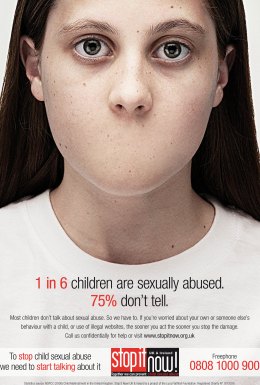
How to Prevent Child Molestation: A Guide for the Concerned Parent


There's outrage from parents over how a man accused of molesting a student was allowed to get easy access to children.


Charles Shelly, 44 is accused of sexually assaulting a 13-year old girl.


Police say in December, Charles Shelly touched the girl while she was in his car watching a movie at Herring Run Park. Investigators say Shelly claimed to be a school mentor to get close to children.


City schools say he is not affiliated with any public education programs. But parents say he was an all too familiar face at the school.
Tuesday, February 14 2012, 23:05 PM EST


A guide for the concerned parent.
by David Mandel, David Pelcovitz, Ph.D and Dr. Susan Schulman


Child molestation is a disease. The child molester is a sick person with an illness that he is unable to control or stop on his own. He has a preoccupation and a sexual desire for young children. In order to stop, he needs help through treatment, supervision or incarceration.
In our collective experience working with this population in the Jewish community, approximately one-third of pedophiles have a preference for boys, one-third prefer girls, and one-third have no preference. Some pedophiles also have distinct preferences within select age groups. And one predator may abuse dozens or hundreds of children.
What can we -- as parents, educators and a community -- do to protect and respond to sexual abuse?
Children are sexually victimized because they canbe
Children are sexually victimized because they can be. They are trusting, vulnerable, curious by nature, and usually not suspicious of adults -- certainly not of a parent, teacher, counselor or other role model. This can be true of adolescents as well, who can fall prey to sexual abuse even into their mid teens.
Children can be victimized repeatedly because they are often too ashamed or frightened to divulge information to others. They are frightened because the molester has threatened to hurt them or their family members, or frightened that their parents will not believe them or will blame them.
While reliable statistics regarding the prevalence of this problem in the Jewish community are not available, there are a number of protective factors that should lead to a lower incidence. These include our community's strong emphasis on family closeness, and community support programs that provide assistance for stressed-out parents.
Unfortunately, however, there are powerful risk factors as well. Research studies have found that those most likely to recognize and report abuse are policemen or emergency room doctors, while those least likely to recognize and report abuse are people who come from the same community or religious background as the abused child. It is therefore not surprising that when abuse is suspected among our own, the first response might be denial or a tendency to ignore a reality that is so antithetical to our standards and way of life.
This vicious cycle, unfortunately, can inadvertently embolden child molesters.
Body and Brain
In the last decade, a number of adolescents and young married people have self-identified and sought treatment for their serious problems with gambling, drugs and alcohol. It is fair to say that as serious as these problems are, they no longer carry the social stigma and social isolation they did just a short few years ago.
Not so with sexual abuse -- not to the victim or to the perpetrator.
He (95 percent are male) will almost never voluntarily seek treatment. The fears of retribution, social isolation, physical harm, loss of family, loss of work, along with his sexual proclivities, prevent him from disclosing.
Similarly, victims of sexual abuse, unlike other victims, almost never self-disclose. Abusers gain the child's loyalty and confidence, and then convince the child that any "bad feelings" are "all your fault."
A crime victim may report to the police. A victim of domestic violence may seek out a relative, a rabbi, or a mental health professional. A drug user or alcohol binger can often be recognized by a spouse or employer. Not so with a victim of sexual abuse who is embarrassed, who represses, and who, years later, continues to carry the scars of the unresolved trauma of the abuse.
Child molestation is an invasion of the body and brain. The harm is staggering, reaching into nearly all areas of the child's life:
• Ability to trust others: Children abused by a trusted adult may have difficulty allowing themselves to get close to members of the extended family or adults they come in contact with. Young children may become more clingy and older children may develop a hostile or mistrustful attitude in relating to others.
• Impaired self-concept: Abused children may develop a sense of permanent damage, which may include feelings of shame, self-blame, and a general sense that they are unworthy of love. Some react by gravitating to peer groups dominated by rejected or rebellious children, since they view themselves as not deserving to be in the mainstream.
• Difficulty controlling emotions: Increased irritability or difficulty calming down after becoming upset is frequently seen in these children. Younger children may manifest regressed behaviors such as an increase in whining, tantrums or bed-wetting. Older children may become less compliant or more withdrawn. Feelings of sadness, emptiness and hopelessness may be accompanied by physical complaints such as frequent headaches or stomach aches.
• Academic difficulties: A number of studies have documented higher rates of academic difficulties in abused children. Impaired concentration and motivation are among the contributors to school difficulties.
• Religious crisis: We have found that some children may experience a crisis in faith after their victimization. For adolescents, in particular, it may be very difficult to reconcile religious beliefs with actions by supposedly "religious" adults who act in a hypocritical manner.
Oftentimes a child will keep the abuse a secret for 10 or 20 years. Only when the child becomes an adult does he have the confidence to share his story. In the meantime, he bears a heavy burden.
Beyond all this, many abused children grow up to become abusers themselves.
Prevention
What can be done?
Children must be taught about it honestly.
Children must be taught about it honestly. They must be prepared to fend off and respond to sexual advances, nuanced and overt, from persons they know and often trust. Parents need to know that it is not enough to teach children only about being wary of strangers. Sex-abuse prevention techniques have been developed that frame the issue in the context of overall safety, no different than fire safety or water safety, helping children to develop wariness without fear.
The most important thing to do to protect your child is to make sure that he or she will always come to tell the parent immediately if something unusual happens. Every child must know that his parents want him to talk to them. Opening the lines of communication must start very early.
Dr. Susan Schulman, a Jewish pediatrician in Brooklyn, recommends that parents discuss with their children in an age-appropriate fashion:
  • The area that is covered by your bathing suit is your private area. Sometimes when you are little your teacher may help you in the bathroom. That is okay. Other than that, you are not allowed to touch someone else and no one is allowed to touch you in the area covered by your bathing suit. You are not allowed to show anyone and no one is allowed to show you. If anyone does this you can say: "No! My mommy doesn't let me!" Go away from that person and tell your mommy what happened.
  • If someone is touching you, hurting you, or making you feel bad, tell me about and I will stop it.
  • Your mommy and daddy love you. We will always love you. Nothing you will do will ever take that love away from you. We want to hear about things that happen in school -- all the good things and even the bad things that happen.
  • If you have done a bad thing, we may not like what you did, but we will always love you.
  • If anyone hurts or scares you, you should come and tell mommy or daddy. They might tell you that something terrible will happen if you tell your mommy, but you must still tell us. We are grownups and we will protect you. I will give you the biggest hug if you tell me about it.
Older children and teenagers need the same reassurance. Tell the child that you are there for him/her, and that you always want to hear about their experiences – good and bad. Tell your child you will always love him.
The larger the family, the more important it is that you give a few minutes a day of eye contact and keep the channel of communication open. Ask, "How was your day?" Even if he doesn't say much, this communicates that you are interested and available when the need arises.
This line of talk should be gently reinforced periodically with the child. There are many milestones where these conversations can occur naturally, e.g. entering preschool, a new school, send off every year to camp, a weekend getaway.
Since the majority of children are molested by people they know – relative, neighbor, sports coach, teacher, bus driver -- you need to discuss trust in older people and role models. This one person did something bad. Place an emphasis on all the other people who are good, loving and kind.
Speak to your children about exercising care not to be caught in a situation alone. Young people should walk in groups, particularly at night.
It is human nature to shy away from discussing sexual issues with our children when they're young adults, let alone when they may be 10 or 15 years old. Yet this is what we need to discuss.
Detection
There are various warning signs and red flags to look for in your child who may have been victimized.
Dr. Schulman lists five behavior changes that may indicate the child is being subjected to abuse:
  1. The child may seem unusually interested in the private areas of the other people's bodies.
  2. The child may draw pictures of hidden body parts.
  3. The child may show signs of stress such as sleep problems, appetite changes, behavior changes, tantrums, restart bed-wetting, fears and irritability.
  4. The child may become unusually afraid or unusually attached to an adult in his life.
  5. The child might give verbal hints or even describe the abuse to the parent.
If your child exhibits a serious problem that appears to be new, you can consider sexual abuse a possible factor without getting alarmed or overreacting. In seeking out professional help for treatment, go to a mental health professional and ask about his or her specialized training in this area.
Recovery
Research regarding the role of religious beliefs in helping victims deal with the impact of abuse repeatedly finds that religion can play a crucial protective role in helping victims find meaning and support, even in the face of cynicism and betrayal. On the other hand, many religious individuals who are victimized by a member of their community experience the additional trauma of feeling abandoned by a religion that they were taught stands against abuse. It is therefore not surprising that a percentage of alienated and rebellious adolescents who "drop out" of active religious observance have a history of being molested.
Identification and treatment can be highly successful as children and adolescents have remarkable resilience. The majority of victims, with proper support, can emerge from the experience strong and healthy.
If we believe that our child is a victim of, molestation and talking is the very first step, what should you talk about? You should emphasize the following to your son or daughter:
  • We, your mother and father, love you.
  • You did absolutely nothing wrong.
  • Your body is yours, let's discuss how to protect it in the future, no one can touch your body in any way without your permission.
  • Your body is good, it's not dirty. Someone else who is not good did something that he wasn't supposed to.
  • He was wrong for doing this.
  • You were not in the wrong because this happened.
And what about the perpetrator? Pedophiles need to be pushed to seek professional treatment, pushed out of circumstances where they can be in regular contact with children, pushed into supervised and controlled environments, or pushed into the criminal justice system.
Pedophilia is a treatable disease. While it is not curable, long-term treatment can be administered over several years, and if the perpetrator is compliant, this can allow him to return to a relatively normal life. Certainly his family should not be punished, as unfortunately often happens.
In Conclusion
A communal resolve by parents to prepare,
By educators to teach,
By school administrators not to tolerate,
By informing law enforcement and child protective authorities as required,
By each group in our community doing their share,
Can lead to a reduction in the number of children who will be hurt,
An increased vigilance against offenders, and
A supportive environment for victims to disclose and be supported.

Thursday, February 9, 2012

Should School Arrest and Fine Parents for Children's Tardiness?

Purcellville woman arrested over kids’ tardiness in school


Tuesday, Feb. 7, 2012 by Laura Peters

Loudoun County Public Schools are making headlines with their policy against excessive tardiness and absences after a Loudoun County mother was arrested and charged with three counts of contributing to the delinquency to a minor.
Maureen Blake, 42, of Purcellville, was served a warrant on Jan. 21, informing her to appear in court on Jan. 25. She was released on a $3,000 bond the same day.
Her children attend an unidentified western Loudoun school close to where the much-publicized Denicore family’s children attend and have been cited for excessive tardies.
Mark and Amy Denicore appeared in court on Feb. 6 after they were summoned for their daughter Sophie’s excessive tardies to school. The Denicore’s three children have been tardy 85 times since September, but have only missed less than three hours each of school.
Mark Denicore, a lawyer, said he could potentially lose his license to practice law if he loses the case and paying up to $3,000 in fines for his children’s tardiness. They will go to trial March 14.
“The warrants were obtained by a Loudoun County [Attendance Officer] via a magistrate on the afternoon of Jan. 19,” Liz Mills, public information officer for Loudoun County Sheriff’s office said. “The sheriff’s office didn’t initiate the arrest and we didn’t determine probable cause. That’s up to the school.”
The warrant was served by a Loudoun County Sheriff’s deputy and a Purcellville Police Officer.
According to Wayde Byard, Loudoun County Schools public information officer, Loudoun County Juvenile and Domestic Relation judges have asked the school system to report excessive absences or tardies to them. The judges’ have asked for the reports from the schools for a year. But, according to Byard, the school system tries to work out constant absence and tardy problems with the parents directly before taking the next step.
“This is not a position we want parents to be in,” Byard said.
The schools do everything in their power to help families who encounter difficulties in getting their children to school, Byard said. But if the family isn’t receptive, the schools need to take it to the next level.
“All we do is report to the court intake officer and from there it’s the legal system,” Byard said. “The judges ask to see all of the excessive absences of tardiness. We don’t issue summons, we don’t send out deputies. That’s up to the court to do that.”
Byard also said that in the beginning of each year, parents sign a Student Rights and Responsibilities packet that addresses their attendance policy.
Under the Students Rights and Responsibilities, after 15 or more consecutive absences or excessive tardies the Virginia Administrative Code requires the student be dropped from the attendance rolls. It’s then up to the principal to discipline the child.
If any student gets a minimum of five unexcused absences, a parent or guardian is required to provide the school with documentation from a licensed physician in regards to their absence.
According to the Student Rights and Responsibilities “a student is truant any time he or she willfully absents himself or herself from school or from any assigned class or activity. Excessive unexcused tardies may result in a truancy referral. Truancy is a serious offense that requires a stern correction action on the part of the school and the parents.”

Monday, January 23, 2012

Pastors Protest School Worship Ban

Posted by urbanfaith.com

Some New York City pastors are protesting the Board of Education's ban on worship in public school space as the ban threatens to spread beyond schools.
Change Your Seat! for urban faith
Pastors were among those arrested in New York City Thursday as they protested the city Board of Education’s ban on religious groups using public school space for worship, The New York Timesreported.
In December, UrbanFaith talked to two sources about the U.S. Supreme Court’s decision not to hear a Bronx church’s appeal of a lower court ruling that affirmed the ban. The Supreme Court’s decision was a catalyst for this protest.
“It’s just crazy that they’re forcing the churches to leave in six weeks,” Democratic councilman and pastor Fernando Cabrera told the Associated Press after he and the others were arrested for trespassing at the city’s Department of Law in Manhattan. “They should absolutely allow the houses of worship to continue doing what they are doing. It has never negatively affected anyone.”
Rev. Bill Devlin of Manhattan Bible Church was taken into custody with Cabrera, according toWORLD Magazine, as was Evangelical Covenant Church (ECC) pastor Rev. Michael Carrion, ECC reported on its website.
“The protestors fear that the city will use the same separation of church and state rationale to evict churches from all public buildings. The New York City Housing Authority already has said it is reconsidering allowing churches to meet in buildings it oversees,” the ECC article said.
“Over the Christmas holidays, several local directors of facilities of the New York City Housing Authority notified religious groups, mostly Christian churches, that they could no longer rent community rooms and other facilities. NYCHA officials gave little or no warning of the change of policy and did most of their communicating with the religious groups through word of mouth or email,” Tony Carnes reported at A Journey Through NYC Religions.
“One director of a Manhattan community center at a public housing project sent the administrator of Manhattan Borough Community Operations a copy of the newspaper article about the case. The implied question was, what should I do? The administrator emailed back, ‘NYCHA will not be able to rent to Churches based on a recent circumstance. Our Apologies,’” Carnes wrote.
Echoing sentiments author and NYC public school parent Katherine Stewart shared with us, Sheila Stainback, a spokeswoman for NYCHA, told PolitickerNY that no one had been evicted because none of the churches who used their facilities had leases. “That language would be incorrect,” said Stainback.
Cabrera called foul on this interpretation of the situation, however, noting that one church had been worshiping in the same public space for six years.
“We are getting the perception that we have an anti-religion mayor,” Cabrera told PolitickerNY. “I have never been arrested for anything. I don’t even drink beer. This is how desperate I am.”
“Not only is it unconstitutional, but on a very practical level we have partnered with our community and our school to serve our children, mentor and we also pay rent,” Rev. Rick Del Rio, pastor of Abounding Grace Ministries, told The Christian Post.
Del Rio attended the rally, but was not arrested. In a note on his Facebook wall, Del Rio said, “When we consider Jesus and all His confrontations and ultimate death, to the disciples and their witness that was turning the world upside down and their courage to stand and ‘Speak’ and ‘DO’ what they knew was true, always at the risk of peril, why should we be so non-confrontational. And what of the examples of Wlberforce and Martin Luther King. … What I saw last Thursday were believers who chose to take a stand, raise their voices and speak truth to power, challenging the authorities to do the right thing and staking their claim to what is rightfully theirs as tax paying citizens of the US and NYC.”

What do you think?