Tuesday, February 21, 2012

Today’s Gr8t Eat: How To Make Whole Wheat Waffles

posted by elev8.com


Waffles vary significantly, but are often made from a batter leavened with baking powder and may be round, square, or rectangular in shape. They are usually served as a sweet breakfast food, topped with butter and maple syrup, other fruit syrups, honey, or powdered sugar. They are also found in many different savory dishes, such as fried chicken and waffles or topped with kidney stew.

They may also be served as desserts, topped with ice cream and various other toppings. They are generally denser and thinner than the Belgian waffle. Waffles were first introduced to North America in 1620 by Pilgrims who brought the method from Holland. Thomas Jefferson brought a waffle iron from France, and waffle frolics or parties became popular in the late 18th century.
REa
Ingredients
1 1/2 cups whole wheat flour, white whole wheat or traditional
2 teaspoons baking powder
1/2 teaspoon salt
2 tablespoons sugar
1 large egg
1 1/2 cups milk
1/3 cup melted butter or vegetable oil
Directions
Whisk together the flour, baking powder, salt, and sugar. In a separate bowl, whisk together the egg, milk, and butter or oil. Mix together the wet and dry ingredients, stirring just till combined. Cook the waffles as directed in the instructions that came with your waffle iron. Yield: about eight 8″ waffles.

Daily Bread: Slacker?

February 21, 2012 — posted by Cindy Hess Kasper on odb.org


While studying the book of Proverbs in my small-group Bible study, our leader suggested that we change the description of a lazy person from asluggard to a slacker (6:6,9). Ah, now he was speaking my lingo. I immediately started thinking of all the people I consider to be slackers.
Like the men and women who fail to teach and discipline their children. Or that guy who refuses to help around the house. Or those teenagers who neglect their studies and play Internet games day and night.
If we’re honest, we’re all susceptible to this. What about being a “prayer slacker” (1 Thess. 5:17-18), or a “Bible-reading slacker” (Ps. 119:103; 2 Tim. 3:16-17), or a “non-exercising-of-our-spiritual-gift slacker” (Rom. 12:4-8), or a “non-witnessing slacker”? (Matt. 28:19-20; Acts 1:8).
If we are not doing what we know God wants us to do, we are certainly spiritual slackers. In fact, when we refuse to obey God, we are sinning.
Listen to these challenging and convicting words from the book of James: “It is sin to know what you ought to do and then not do it” (4:17 NLT). Let’s not be spiritual slackers.

When we know what God wants us to do,
But then we refuse to obey,
We’re ignoring the voice of the Lord,
And sinfully choosing our way. —Sper
We may make excuses for not obeying God,
but He still calls it disobedience.

Jeremy Lin Was Bible Study Teacher At Harvard

posted by elev8.com

Lin was involved in a Bible study group run by the Harvard-Radcliffe Asian American Christian Fellowship, according to a 2010 interview with the online publication StudentSoul.org. Jeremy Lin, while enrolled at Harvard University and playing for its basketball team, was co-leader of a Bible study group.
“I became a co-leader my junior year and I’m co-leading again this year. The group is a mix of believers and seekers,” said Lin to StudentSoul.org.
“Our fellowship has about 80 people and our purpose is to know God and make him known. We’re trying to do that in a way that is relevant for everyone on our campus.”
Lin skyrocketed to national, and arguably international, fame after leading his losing New York Knicks team to 7 straight wins over the past few weeks. For six consecutive games, Lin has at least 20 points – pretty good for a substitute player who went undrafted after college.
The 6’3” point guard played basketball at Harvard for all four years that he was enrolled there. After college, he signed as a free agent with the Golden State Warriors. But the Golden State Warriors and later the Houston Rockets both eventually dropped him after a short period of time. Eventually, he was picked up by the New York Knicks.
“Even though I go to church, I don’t really know many people there, but my real community is my small group.”
While with the Golden State Warriors in 2010, Lin gave a faith testimony at River of Life Christian Church of Santa Clara, Calif. He said everything in his life were blessings from God.

Monday, February 20, 2012

PBN NEWS 2 /19/ 12


Thursday, February 16, 2012

Hometown Highlight: Baltimore 2012 B'More Healthy Expo

B’More Healthy…Go Green!
The B’More Healthy Expo is Saturday, March 17th…and in honor of St Patrick’s Day, we invite you to “Go Green… and be more healthy!”
Get screened and save some green. Proactive, preventive care helps you save on health care . Meet with health care professionals to learn how they can help your family be more healthy. Taste fresh, green vegetables and fruits to fuel your body. Explore the outdoors! Take a walk through Baltimore’s green pathways. Do you have a green thumb? Try your hand at gardening. Explore green living options from healthy homes, to alternative fuels, to smart home remodeling, to energy efficient fuels for home and cars. You can even stand in front of the green screen with FOX45 meteorologists and forecast the weather!
Join us on St. Patrick’s Day, Saturday, March 17th and “B’More Healthy…and Go Green!”
The B’More Healthy Expo is designed to showcase vendors, programs, and opportunities to get people moving, taking action and making choices to be more healthy. The Expo promises to be fun engaging all ages in health and wellness activities to be healthy and fit physically, emotionally, spiritually, and financially. The EXPO will provide health screenings, wellness information, resources…. All in one place in one time in this region!
If your organization would like to have a presence at the event and reach thousands of Marylanders, please contact:
Pat Sullivan
Email: info@bmorehealthyexpo.com
Phone Number: (410)662-1443

Song of the day by Ricky Dillard & New G - One More Chance

Wednesday, February 15, 2012

Black History: Stokely Carmichael Coined the Phrase "Black Power!"

Stokely Carmichael was born in the Port of Spain, Trinidad, on 29th June, 1941. Carmichael moved to the United States in 1952 and attended high school in New York City. He entered Howard University in 1960 and soon afterwards joined the Student Nonviolent Coordinating Committee (SNCC).

In 1961 Carmichael became a member of the Freedom Riders. After training in non-violent techniques, black and white volunteers sat next to each other as they travelled through the Deep South. Local police were unwilling to protect these passengers and in several places they were beaten up by white mobs. In Jackson, Mississippi, Carmichael was arrested and jailed for 49 days in Parchman Penitentiary. Carmichael also worked on the Freedom Summer project and in 1966 became chairman of SNCC.

On 5th June, 1966, James Meredith started a solitary March Against Fear from Memphis to Jackson, to protest against racism. Soon after starting his march he was shot by sniper. When they heard the news, other civil rights campaigners, including Carmichael, Martin Luther King and Floyd McKissick, decided to continue the march in Meredith's name.

When the marchers got to Greenwood, Mississippi, Carmichael and some of the other marchers were arrested by the police. It was the 27th time that Carmichael had been arrested and on his release on 16th June, he made his famous Black Power speech. Carmichael called for "black people in this country to unite, to recognize their heritage, and to build a sense of community". He also advocated that African Americans should form and lead their own organizations and urged a complete rejection of the values of American society.

The following year Carmichael joined with Charles V. Hamilton to write the book, 
Black Power: The Politics of Liberation in America (1967). Some leaders of civil rights groups such as the National Association for the Advancement of Coloured People (NAACP) and Southern Christian Leadership Conference (SCLC), rejected Carmichael's ideas and accused him of black racism.

Carmichael also adopted the slogan of "Black is Beautiful" and advocated a mood of black pride and a rejection of white values of style and appearance. This included adopting Afro hairstyles and African forms of dress. Carmichael began to criticize Martin Luther King and his ideology of nonviolence. He eventually joined the Black Panther Party where he became "honorary prime minister".

When Carmichael denounced United States involvement in the Vietnam War, his passport was confiscated and held for ten months. When his passport was returned, he moved with his wife, Miriam Makeba, to Guinea, where he wrote the book, Stokely Speaks: Black Power Back to Pan-Africanism (1971).

Carmichael, who adopted the name, Kwame Ture, also helped to establish the All-African People's Revolutionary Party and worked as an aide to Guinea's prime minister, Sekou Toure. After the death of Toure in 1984 Carmichael was arrested by the new military regime and charged with trying to overthrow the government. However, he only spent three days in prison before being released.
Stokely Carmichael died of cancer on 15th November, 1998.

Song of the Day by Mali Music- Mercy Lord

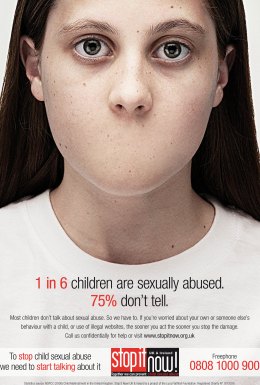
How to Prevent Child Molestation: A Guide for the Concerned Parent


There's outrage from parents over how a man accused of molesting a student was allowed to get easy access to children.


Charles Shelly, 44 is accused of sexually assaulting a 13-year old girl.


Police say in December, Charles Shelly touched the girl while she was in his car watching a movie at Herring Run Park. Investigators say Shelly claimed to be a school mentor to get close to children.


City schools say he is not affiliated with any public education programs. But parents say he was an all too familiar face at the school.
Tuesday, February 14 2012, 23:05 PM EST


A guide for the concerned parent.
by David Mandel, David Pelcovitz, Ph.D and Dr. Susan Schulman


Child molestation is a disease. The child molester is a sick person with an illness that he is unable to control or stop on his own. He has a preoccupation and a sexual desire for young children. In order to stop, he needs help through treatment, supervision or incarceration.
In our collective experience working with this population in the Jewish community, approximately one-third of pedophiles have a preference for boys, one-third prefer girls, and one-third have no preference. Some pedophiles also have distinct preferences within select age groups. And one predator may abuse dozens or hundreds of children.
What can we -- as parents, educators and a community -- do to protect and respond to sexual abuse?
Children are sexually victimized because they canbe
Children are sexually victimized because they can be. They are trusting, vulnerable, curious by nature, and usually not suspicious of adults -- certainly not of a parent, teacher, counselor or other role model. This can be true of adolescents as well, who can fall prey to sexual abuse even into their mid teens.
Children can be victimized repeatedly because they are often too ashamed or frightened to divulge information to others. They are frightened because the molester has threatened to hurt them or their family members, or frightened that their parents will not believe them or will blame them.
While reliable statistics regarding the prevalence of this problem in the Jewish community are not available, there are a number of protective factors that should lead to a lower incidence. These include our community's strong emphasis on family closeness, and community support programs that provide assistance for stressed-out parents.
Unfortunately, however, there are powerful risk factors as well. Research studies have found that those most likely to recognize and report abuse are policemen or emergency room doctors, while those least likely to recognize and report abuse are people who come from the same community or religious background as the abused child. It is therefore not surprising that when abuse is suspected among our own, the first response might be denial or a tendency to ignore a reality that is so antithetical to our standards and way of life.
This vicious cycle, unfortunately, can inadvertently embolden child molesters.
Body and Brain
In the last decade, a number of adolescents and young married people have self-identified and sought treatment for their serious problems with gambling, drugs and alcohol. It is fair to say that as serious as these problems are, they no longer carry the social stigma and social isolation they did just a short few years ago.
Not so with sexual abuse -- not to the victim or to the perpetrator.
He (95 percent are male) will almost never voluntarily seek treatment. The fears of retribution, social isolation, physical harm, loss of family, loss of work, along with his sexual proclivities, prevent him from disclosing.
Similarly, victims of sexual abuse, unlike other victims, almost never self-disclose. Abusers gain the child's loyalty and confidence, and then convince the child that any "bad feelings" are "all your fault."
A crime victim may report to the police. A victim of domestic violence may seek out a relative, a rabbi, or a mental health professional. A drug user or alcohol binger can often be recognized by a spouse or employer. Not so with a victim of sexual abuse who is embarrassed, who represses, and who, years later, continues to carry the scars of the unresolved trauma of the abuse.
Child molestation is an invasion of the body and brain. The harm is staggering, reaching into nearly all areas of the child's life:
• Ability to trust others: Children abused by a trusted adult may have difficulty allowing themselves to get close to members of the extended family or adults they come in contact with. Young children may become more clingy and older children may develop a hostile or mistrustful attitude in relating to others.
• Impaired self-concept: Abused children may develop a sense of permanent damage, which may include feelings of shame, self-blame, and a general sense that they are unworthy of love. Some react by gravitating to peer groups dominated by rejected or rebellious children, since they view themselves as not deserving to be in the mainstream.
• Difficulty controlling emotions: Increased irritability or difficulty calming down after becoming upset is frequently seen in these children. Younger children may manifest regressed behaviors such as an increase in whining, tantrums or bed-wetting. Older children may become less compliant or more withdrawn. Feelings of sadness, emptiness and hopelessness may be accompanied by physical complaints such as frequent headaches or stomach aches.
• Academic difficulties: A number of studies have documented higher rates of academic difficulties in abused children. Impaired concentration and motivation are among the contributors to school difficulties.
• Religious crisis: We have found that some children may experience a crisis in faith after their victimization. For adolescents, in particular, it may be very difficult to reconcile religious beliefs with actions by supposedly "religious" adults who act in a hypocritical manner.
Oftentimes a child will keep the abuse a secret for 10 or 20 years. Only when the child becomes an adult does he have the confidence to share his story. In the meantime, he bears a heavy burden.
Beyond all this, many abused children grow up to become abusers themselves.
Prevention
What can be done?
Children must be taught about it honestly.
Children must be taught about it honestly. They must be prepared to fend off and respond to sexual advances, nuanced and overt, from persons they know and often trust. Parents need to know that it is not enough to teach children only about being wary of strangers. Sex-abuse prevention techniques have been developed that frame the issue in the context of overall safety, no different than fire safety or water safety, helping children to develop wariness without fear.
The most important thing to do to protect your child is to make sure that he or she will always come to tell the parent immediately if something unusual happens. Every child must know that his parents want him to talk to them. Opening the lines of communication must start very early.
Dr. Susan Schulman, a Jewish pediatrician in Brooklyn, recommends that parents discuss with their children in an age-appropriate fashion:
  • The area that is covered by your bathing suit is your private area. Sometimes when you are little your teacher may help you in the bathroom. That is okay. Other than that, you are not allowed to touch someone else and no one is allowed to touch you in the area covered by your bathing suit. You are not allowed to show anyone and no one is allowed to show you. If anyone does this you can say: "No! My mommy doesn't let me!" Go away from that person and tell your mommy what happened.
  • If someone is touching you, hurting you, or making you feel bad, tell me about and I will stop it.
  • Your mommy and daddy love you. We will always love you. Nothing you will do will ever take that love away from you. We want to hear about things that happen in school -- all the good things and even the bad things that happen.
  • If you have done a bad thing, we may not like what you did, but we will always love you.
  • If anyone hurts or scares you, you should come and tell mommy or daddy. They might tell you that something terrible will happen if you tell your mommy, but you must still tell us. We are grownups and we will protect you. I will give you the biggest hug if you tell me about it.
Older children and teenagers need the same reassurance. Tell the child that you are there for him/her, and that you always want to hear about their experiences – good and bad. Tell your child you will always love him.
The larger the family, the more important it is that you give a few minutes a day of eye contact and keep the channel of communication open. Ask, "How was your day?" Even if he doesn't say much, this communicates that you are interested and available when the need arises.
This line of talk should be gently reinforced periodically with the child. There are many milestones where these conversations can occur naturally, e.g. entering preschool, a new school, send off every year to camp, a weekend getaway.
Since the majority of children are molested by people they know – relative, neighbor, sports coach, teacher, bus driver -- you need to discuss trust in older people and role models. This one person did something bad. Place an emphasis on all the other people who are good, loving and kind.
Speak to your children about exercising care not to be caught in a situation alone. Young people should walk in groups, particularly at night.
It is human nature to shy away from discussing sexual issues with our children when they're young adults, let alone when they may be 10 or 15 years old. Yet this is what we need to discuss.
Detection
There are various warning signs and red flags to look for in your child who may have been victimized.
Dr. Schulman lists five behavior changes that may indicate the child is being subjected to abuse:
  1. The child may seem unusually interested in the private areas of the other people's bodies.
  2. The child may draw pictures of hidden body parts.
  3. The child may show signs of stress such as sleep problems, appetite changes, behavior changes, tantrums, restart bed-wetting, fears and irritability.
  4. The child may become unusually afraid or unusually attached to an adult in his life.
  5. The child might give verbal hints or even describe the abuse to the parent.
If your child exhibits a serious problem that appears to be new, you can consider sexual abuse a possible factor without getting alarmed or overreacting. In seeking out professional help for treatment, go to a mental health professional and ask about his or her specialized training in this area.
Recovery
Research regarding the role of religious beliefs in helping victims deal with the impact of abuse repeatedly finds that religion can play a crucial protective role in helping victims find meaning and support, even in the face of cynicism and betrayal. On the other hand, many religious individuals who are victimized by a member of their community experience the additional trauma of feeling abandoned by a religion that they were taught stands against abuse. It is therefore not surprising that a percentage of alienated and rebellious adolescents who "drop out" of active religious observance have a history of being molested.
Identification and treatment can be highly successful as children and adolescents have remarkable resilience. The majority of victims, with proper support, can emerge from the experience strong and healthy.
If we believe that our child is a victim of, molestation and talking is the very first step, what should you talk about? You should emphasize the following to your son or daughter:
  • We, your mother and father, love you.
  • You did absolutely nothing wrong.
  • Your body is yours, let's discuss how to protect it in the future, no one can touch your body in any way without your permission.
  • Your body is good, it's not dirty. Someone else who is not good did something that he wasn't supposed to.
  • He was wrong for doing this.
  • You were not in the wrong because this happened.
And what about the perpetrator? Pedophiles need to be pushed to seek professional treatment, pushed out of circumstances where they can be in regular contact with children, pushed into supervised and controlled environments, or pushed into the criminal justice system.
Pedophilia is a treatable disease. While it is not curable, long-term treatment can be administered over several years, and if the perpetrator is compliant, this can allow him to return to a relatively normal life. Certainly his family should not be punished, as unfortunately often happens.
In Conclusion
A communal resolve by parents to prepare,
By educators to teach,
By school administrators not to tolerate,
By informing law enforcement and child protective authorities as required,
By each group in our community doing their share,
Can lead to a reduction in the number of children who will be hurt,
An increased vigilance against offenders, and
A supportive environment for victims to disclose and be supported.

Tuesday, February 14, 2012

Black History: Norbert Rillieux


Norbert Rillieux (March 17, 1806-October 8, 1894) was an African-American inventor and engineer who invented a device that revolutionized sugar processing. Rillieux's multiple effect vacuum sugar evaporator (patented in 1864) made the processing of sugar more efficient, faster, and much safer. The resulting sugar was also superior. His apparatus was eventually adopted by sugar processing plants all around the world.


Rillieux was born in New Orleans, Louisiana, USA. His mother had been a slave and his father was a wealthy white sugar plantation owner. Norbert's brilliance was noticed early in his life. He was educated in Paris, France, and later taught engineering in Paris. Rillieux published many steam engineering papers.

While in Paris, Rillieux learned that the boiling point of liquids is reduced as the pressure is reduced (like in a vacuum). Rillieux applied this to the processing of sugar, heating the cane sugar in a vacuum, and re-using the steam in the processing procedure. This resulted in a highly efficient mechanical process that replaced the old, laborious, dangerous, and costly method of processing sugar by hand that was called the "Jamaica train."

What Is The True Meaning Behind St. Valentine's Day

posted by elev8.com

Each year on February 14 we peruse the store shelves for the perfect gift or card for a loved one. According to Hallmark, more than 163 million cards—not including packaged kids’ valentines—are exchanged. And it’s not just an American phenomenon. Valentine’s Day is celebrated in Canada, Mexico, the United Kingdom, France, Australia, Italy and Denmark.
But why? How did this holiday of love and romance originate and, more importantly, how did St. Valentine become involved? The answers to those questions are not easy ones. Valentine’s Day is a holiday shrouded in mystery and legend.
The origins of St. Valentine’s Day lie in the ancient Roman fertility festival Lupercalia, which was celebrated on February 15. During the festival, young women would place their names in a large urn. The young men would draw a name from the urn and then be romantically linked with that young woman for the following year. Still other legends cite the fact that February 14 marked the date when birds began mating.
A quick quiz: St. Valentine was:
a)  a priest in the Roman Empire who helped persecuted Christians during the reign of Claudius II, was thrown in jail and later beheaded on Feb. 14.
b)  a Catholic bishop of Terni who was beheaded, also during the reign of Claudius II.
c)  someone who secretly married couples when marriage was forbidden, or suffered in Africa, or wrote letters to his jailer’s daughter, and was probably beheaded.
d)  all, some, or possibly none of the above.
If you guessed d), give yourself a box of chocolates. Although the mid-February holiday celebrating love and lovers remains wildly popular, the confusion over its origins led the Catholic Church, in 1969, to drop St. Valentine’s Day from the Roman calendar of official, worldwide Catholic feasts. (Those highly sought-after days are reserved for saints with more clear historical record. After all, the saints are real individuals for us to imitate.) Some parishes, however, observe the feast of St. Valentine.
The roots of St. Valentine’s Day lie in the ancient Roman festival of Lupercalia, which was celebrated on Feb. 15. For 800 years the Romans had dedicated this day to the god Lupercus. On Lupercalia, a young man would draw the name of a young woman in a lottery and would then keep the woman as a sexual companion for the year.
Pope Gelasius I was, understandably, less than thrilled with this custom. So he changed the lottery to have both young men and women draw the names of saints whom they would then emulate for the year (a change that no doubt disappointed a few young men). Instead of Lupercus, the patron of the feast became Valentine. For Roman men, the day continued to be an occasion to seek the affections of women, and it became a tradition to give out handwritten messages of admiration that included Valentine’s name.
There was also a conventional belief in Europe during the Middle Ages that birds chose their partners in the middle of February. Thus the day was dedicated to love, and people observed it by writing love letters and sending small gifts to their beloved. Legend has it that Charles, duke of Orleans, sent the first real Valentine card to his wife in 1415, when he was imprisoned in the Tower of London. (He, however, was not beheaded, and died a half-century later of old age.)

Bishop Preaches Sermon, Collaspes And Dies On Altar [VIDEO]

posted by elev8.com

For we know not the hour or time. Will you be ready?
Bishop Barnett K. Thoroughgood had just finished his Sunday sermon called “I Am Here to do Battle” when he sat down in his seat on stage, and collapsed. Soon after, he was pronounced dead. Members of New Jerusalem Church of God in Christ prayed and cried as paramedics tried to revive their 62-year-old pastor to no avail.
This was his last sermon:
God Rest His Soul.  Click here to read more

Monday, February 13, 2012

Black History: Blanche Kelso Bruce

Information from Wikipedia.

Bruce was born in Prince Edward County, Virginia near Farmville to Pettis Perkinson, a white Virginia plantation owner, and an African-American house slave named Polly Bruce. He was treated comparatively well by his father, who educated him together with his legitimate half-brother. When Blanche Bruce was young, he played with his half-brother. As Blanche Bruce was born enslaved, because of his mother's status, his father legally freed him and arranged for an apprenticeship so he could learn a trade.[1]
Bruce's house at 909 M Street NW in Washington, D.C. was declared a National Historic Landmark in 1975
In 1850, Bruce moved to Missouri after becoming a printer's apprentice. After the Union Army rejected his application to fight in the Civil War, Bruce taught school and attended Oberlin College in Ohio for two years. Then he went to work as a steamboat porter on the Mississippi River. In 1864, he moved toHannibal, Missouri, where he established a school for blacks.
During Reconstruction, Bruce became a wealthy landowner in the Mississippi Delta. He was appointed to the positions of Tallahatchie County registrar of voters and tax assessor before winning an election forsheriff in Bolivar County. He later was elected to other county positions, including tax collector and supervisor of education, while he also edited a local newspaper. In February 1874, Bruce was elected by the state legislature to the Senate as a Republican. On February 14, 1879, Bruce presided over the U.S. Senate becoming the first African-American (and the only former slave) to do so.[2] Bruce served as theDistrict of Columbia recorder of deeds in 1891–93, and again as register of the treasury until his death in 1898.
On June 24, 1878, Bruce married Josephine Beal Willson (1853–February 15, 1923) of Cleveland, Ohio amid great publicity; the couple traveled to Europe for a four-month honeymoon. Their only child, Roscoe Conkling Bruce was born in 1879. He was named for New York Senator Roscoe Conkling, Bruce's mentor in the Senate. In 2002, scholar Molefi Kete Asante listed Blanche Bruce on his list of100 Greatest African Americans.[3]